

More Than Just Points: How Gamification is Reshaping Brand Engagement
The Art of Engagement in a World of Shrinking Attention Spans
One of the biggest challenges of the digital age is undoubtedly the attention economy. Brands must be more creative than ever to capture their target audience's interest and convey their messages. Traditional event formats, by creating passive listeners, fall short in this new world. This is where gamification in brand engagement emerges as a powerful strategy, moving beyond a mere trend to become central to experience design.
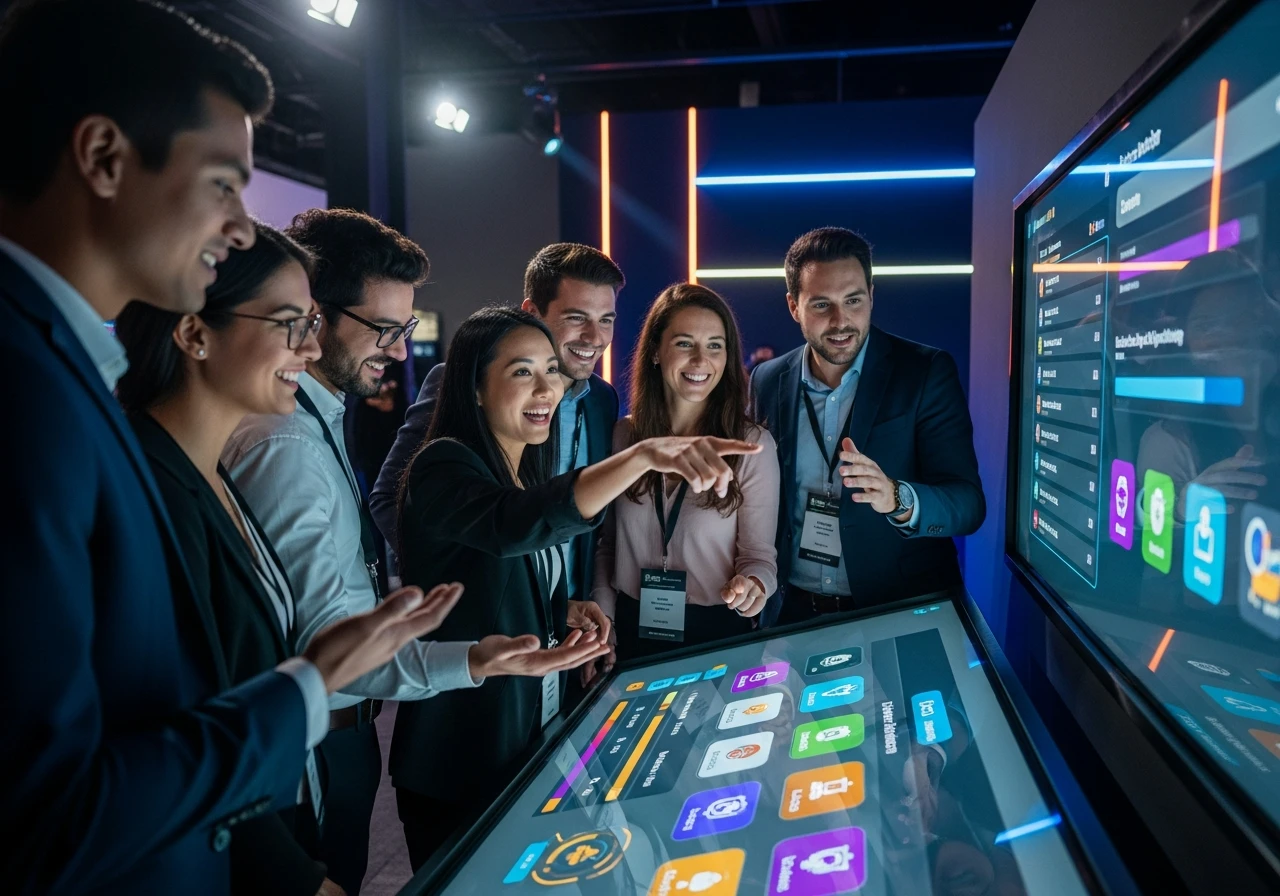
Gamification is far more than simply adding a game to an event. At its core, it's the art of motivating people, guiding behavior, and solving problems by applying game-like mechanics and thinking to non-game contexts. Points, badges, and leaderboards are merely the surface. Its true power lies in tapping into fundamental human psychological motivators: the desire for achievement, competition, exploration, and social connection.
The Psychology of Motivation: Why Gamification Works
A successful gamification strategy simultaneously activates participants' intrinsic and extrinsic motivations. While extrinsic motivators (gifts, discounts, status-symbol badges) encourage initial participation, it's intrinsic motivations that foster true loyalty and deep engagement.
- Sense of Achievement and Mastery: Offering participants small, completable tasks (e.g., visiting specific booths, answering a speaker's question) provides a sense of progress and accomplishment. The running goals and earned trophies in the Nike Run Club app are well-known examples of this mechanic.
- Autonomy and Exploration: Granting participants the freedom to forge their own paths within an event space and discover hidden "easter eggs" makes the experience personal and memorable. Interactive maps and discovery quests used at large festivals like SXSW nurture this sense of autonomy.
- Social Connection: Team-based competitions or shared goals create a natural bond and networking environment among participants. Leaderboards foster healthy competition, maximizing interaction.
Gamification as a Strategic Tool
When designed correctly, gamification produces tangible outcomes that serve brand objectives. It's not just about entertaining participants; it's about achieving measurable results.
1. Guiding Behavior and Data Collection
Want to know which booth was most visited or which talk garnered the highest engagement in an event app? Gamification makes this possible. For instance, awarding extra points to those who visit specific sponsor booths allows you to direct traffic to desired areas. The data collected during these interactions provides invaluable insights into participants' interests and behavioral patterns. This data is a goldmine for personalizing future events.
2. Facilitating Education and Knowledge Transfer
Conveying complex product information or corporate messages is often challenging. Gamified quizzes or simulations make the learning process engaging and memorable. Instead of passively listening to a dull presentation, participants actively learn by using the information. This is an extremely effective method, especially for technical product launches or dealer meetings.
3. Deepening Brand Loyalty
Spotify Wrapped is a brilliant example of how gamification can elevate brand loyalty to new heights. Each year, Spotify transforms user data into a personalized, shareable, and fun "year-end report card," creating a global marketing moment. Users perceive their musical journey as the outcome of a game and proudly share it with their social circles. The same logic can be applied to post-event experiences. Personal infographics or digital certificates summarizing participants' event journeys strengthen the bond with the brand.
The Future is in Play, But the Rules Are Changing
Gamification is no longer a mere "add-on" at the end of events but an integral part of the experience strategy. However, to succeed, superficial implementations must be avoided. Simply distributing points and badges is not enough. It is crucial for the strategy to align with the brand's identity and the overall event objective, offer genuine value to the participant, and tell a meaningful story.
From Coca-Cola's augmented reality (AR) games at global events to Salesforce's learning paths at the Dreamforce conference, major brands are demonstrating their understanding of the game's rules. Success will belong to brands that can combine technology with human psychology, transforming participants from passive observers into active heroes of the experience.
If you'd like to implement these trends for your brand and design an unforgettable experience, contact us.
Get a Quote for Your Project
Contact us for experiences that will make your events unforgettable.