Kahramaa Carbon Zone
A museum experience that doesn't describe a child's carbon footprint — it shows them what it does to their 2030.
KAHRAMAA · JANUARY 2022
Brief
Once the Water Awareness Zone opened at the Kahramaa Awareness Park museum in 2021, it visibly changed how school groups behaved. Kids walked out carrying water differently. Kahramaa asked us to extend that logic into a second zone — this time built around carbon footprint.
The difficulty of the brief was obvious: carbon isn't water. You can make a child carry water in a bucket, you can make them feel the effort. Carbon can't be seen, weighed or held. Telling kids about it as information turns into "drive less" and evaporates. The only way to make carbon felt was to bind it to a tangible consequence — to something the child already knew, loved, and shared a future with.
“If you want to teach a child their carbon footprint, don't show them the carbon — show them their own 2030.”
Insight
The widest gap between a child and the climate is a question of time scale: climate lives on a long horizon, a child lives on a short one. "In 2050, glaciers will melt" is, to a child, an infinitely distant sentence; "school tomorrow" is just tomorrow. Carbon footprint gets swallowed by that long horizon.
There are two ways to bridge a child's world and the climate: first, anchor the consequence to a place they recognize (their city, their house); second, write the consequence onto their own face (their aged self). Information gets forgotten, but "this is my home" and "this is my face" don't. Our job wasn't to tell a child "carbon is bad." It was to show them their own 2030 with their own eyes.
The Idea
We split the zone into a four-station journey. A school group enters at one end and exits at the other — the four stations work as four stages that trigger each other.
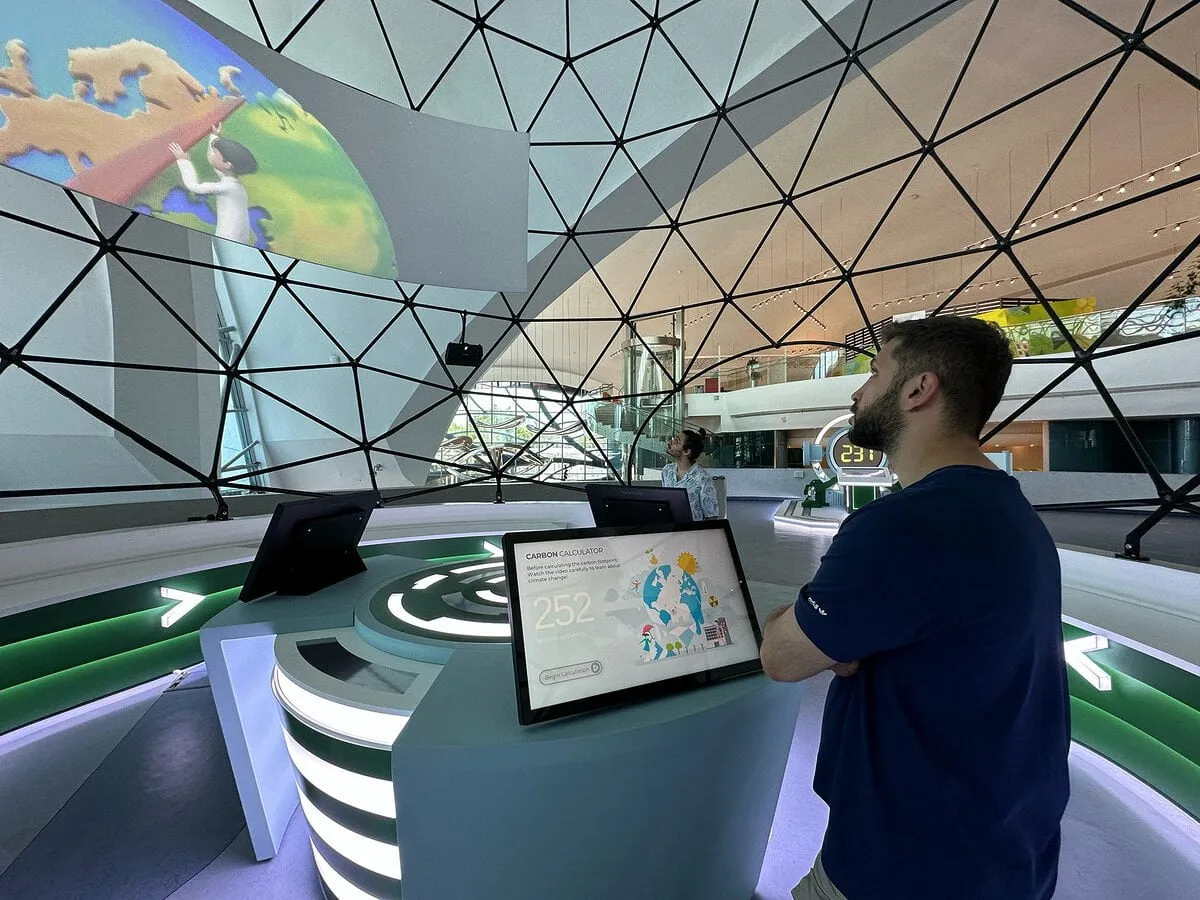
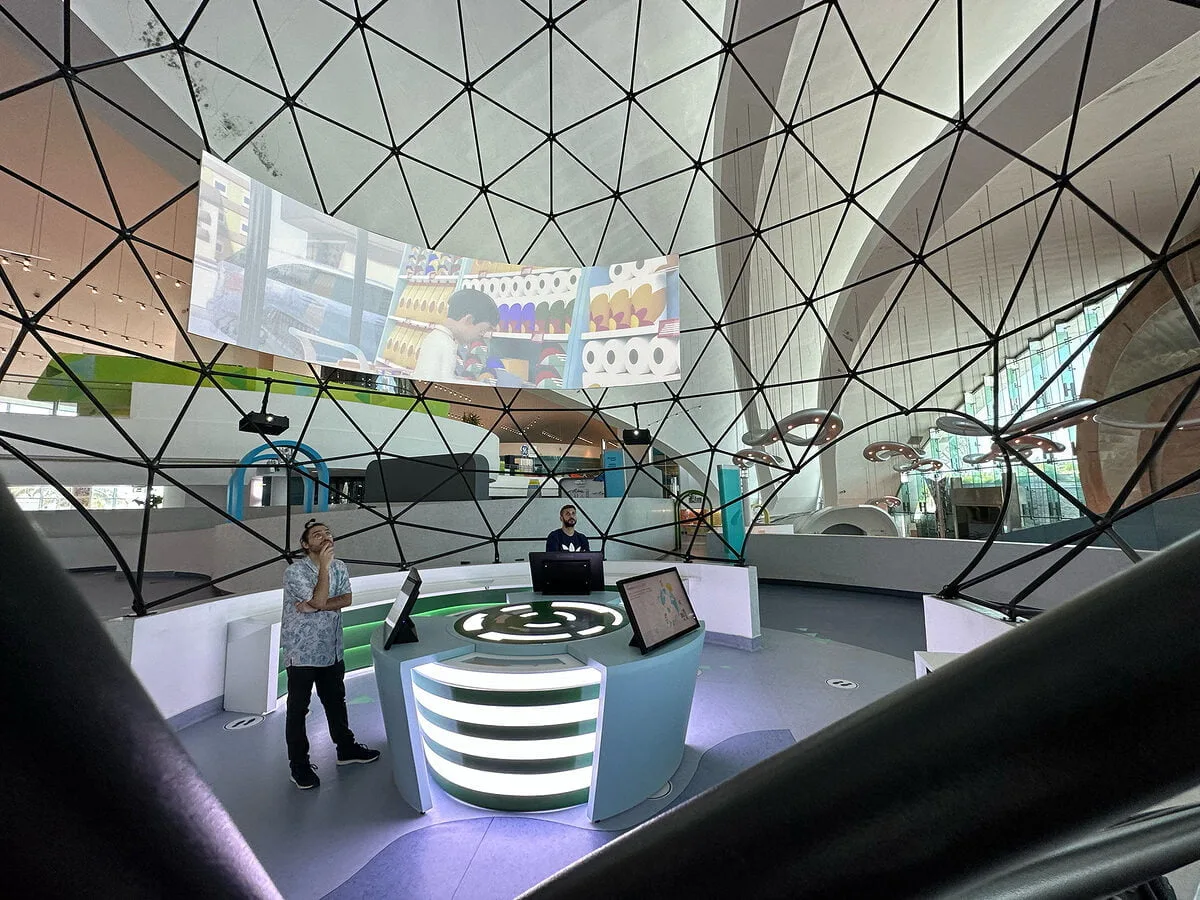
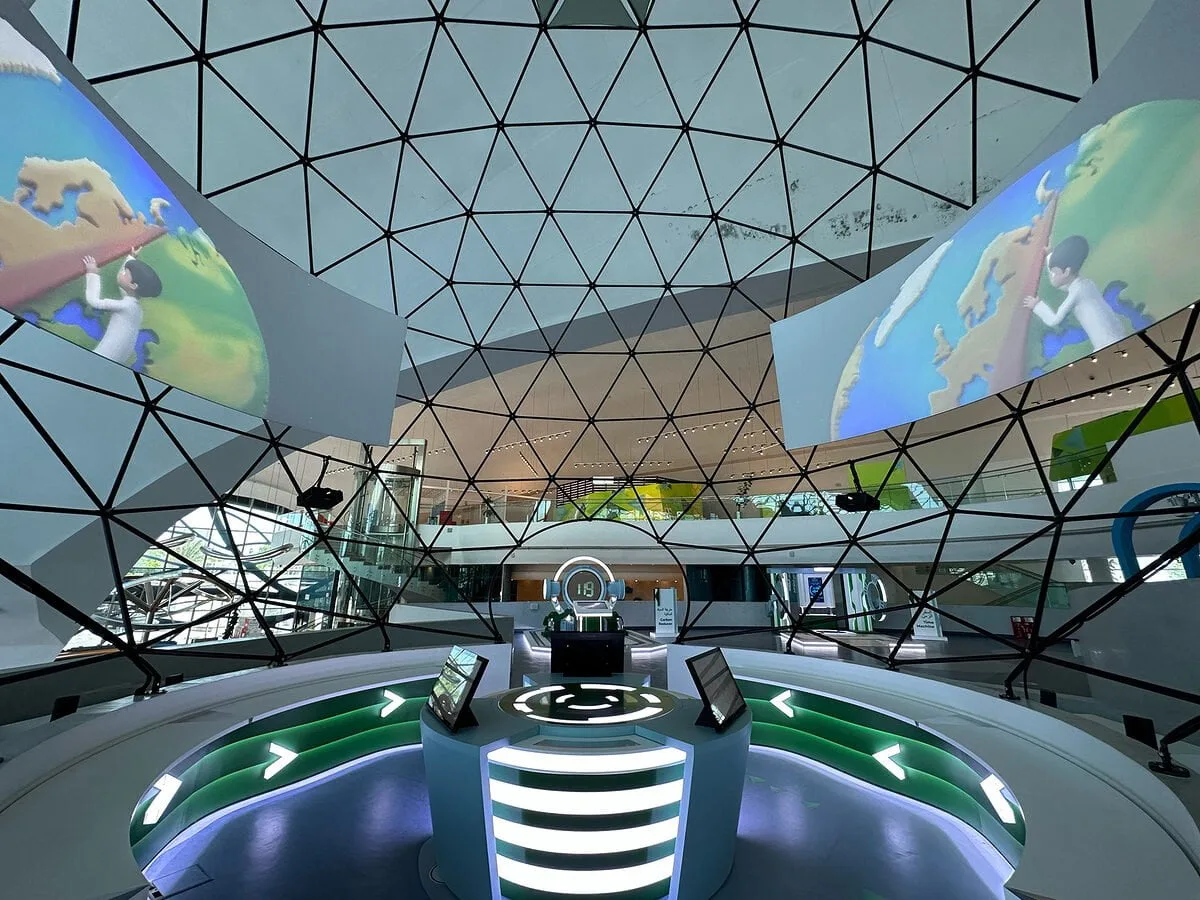
1. Dome — The Carbon Footprint Film. Students first enter a giant dome. The teacher starts the film from a screen. Above every head, synchronized across the full 360° of the dome surface, a 3D carbon footprint film plays — visually showing how much carbon each step of daily life produces. We made the film ourselves: concept, script, visuals and audio all produced by Harikalar.
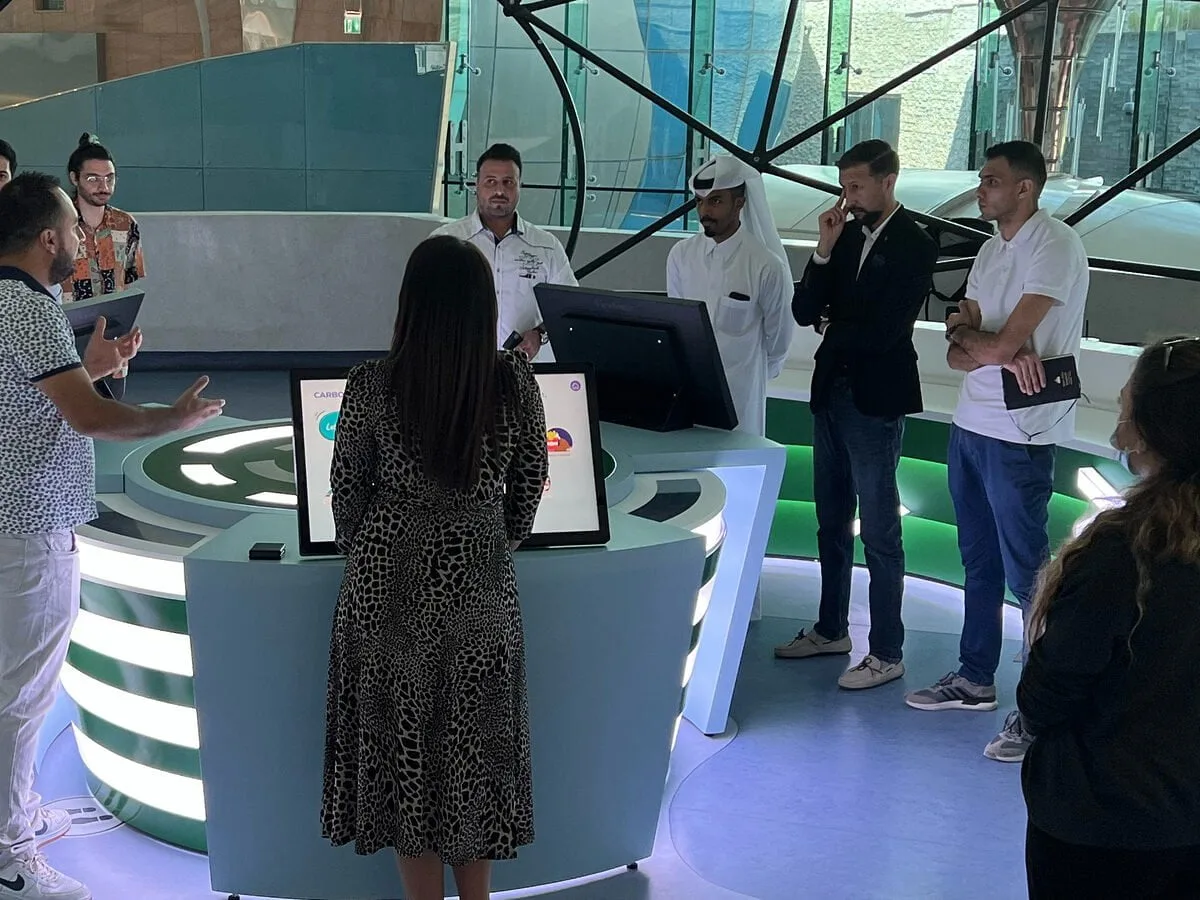
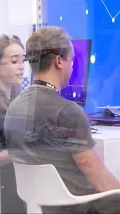
2. The Three-Screen Quiz. When the film ends, every child turns to their own screen. A three-screen station starts asking daily life questions — "How do you get to school?", "What do you eat instead of meat?", "What temperature is your AC?" As they answer, the large hologram screen at the next station shows each child's carbon score climbing. When the whole group finishes, the holograms hold a portrait of "this class's carbon footprint."
3. The 3D Qatari House. The real insight kicks in here. The children's answers are projected onto a fully 3D-modeled classic Qatari house: green dots mark right answers, yellow ones mark answers that need improvement, red ones mark wrong answers. The children walk around the house, touching the yellows and reds one by one — each touch shows them what they did, what they should have done, and lets them lower their own score with their own hand. An abstract carbon number takes meaning by being painted onto a house the children already recognize.
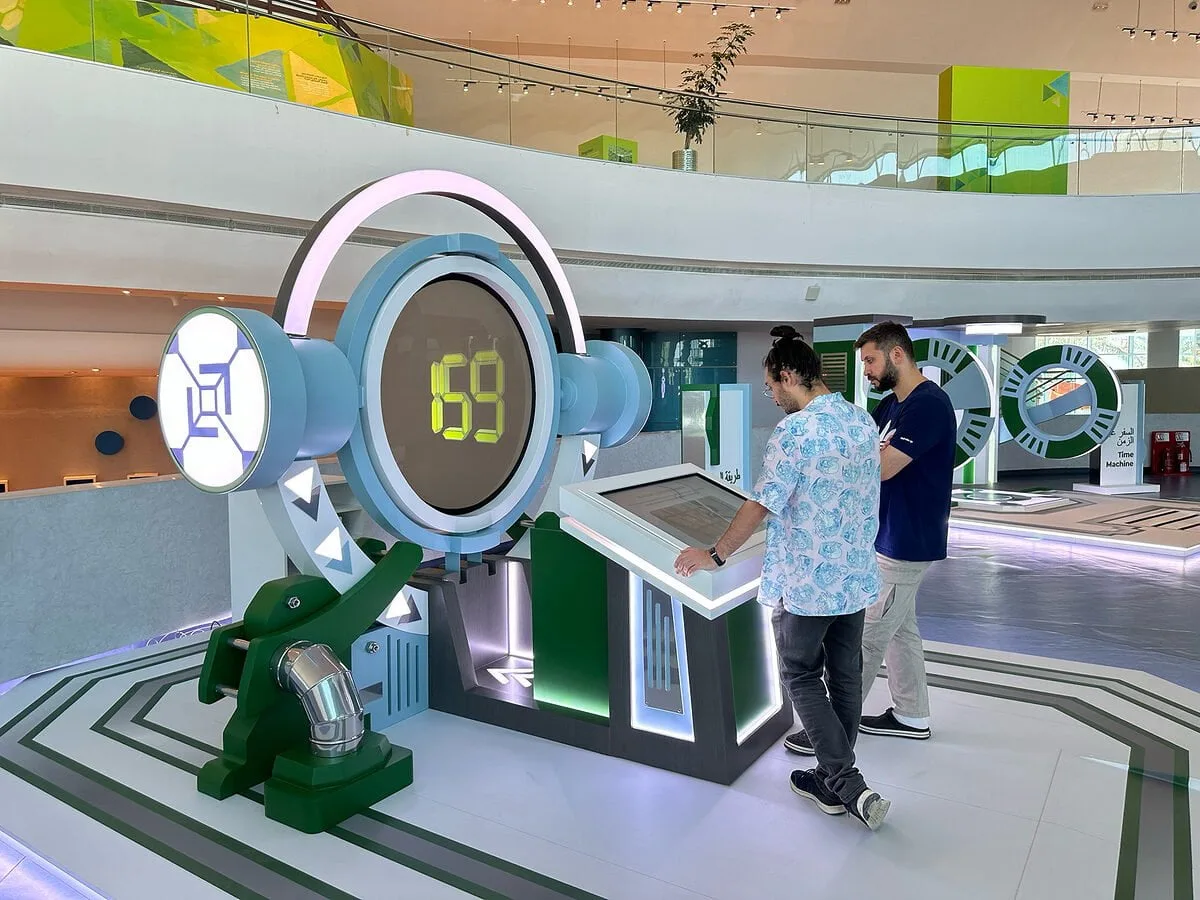
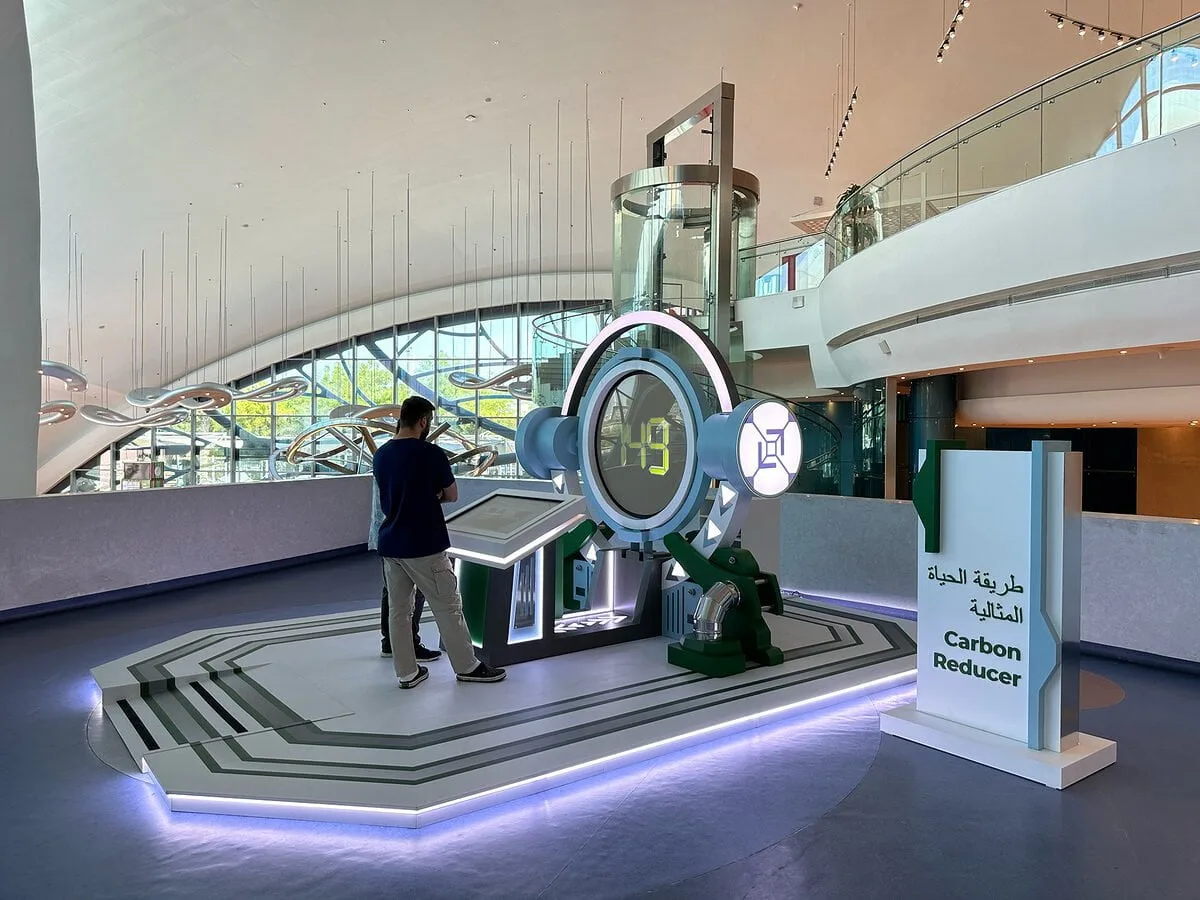
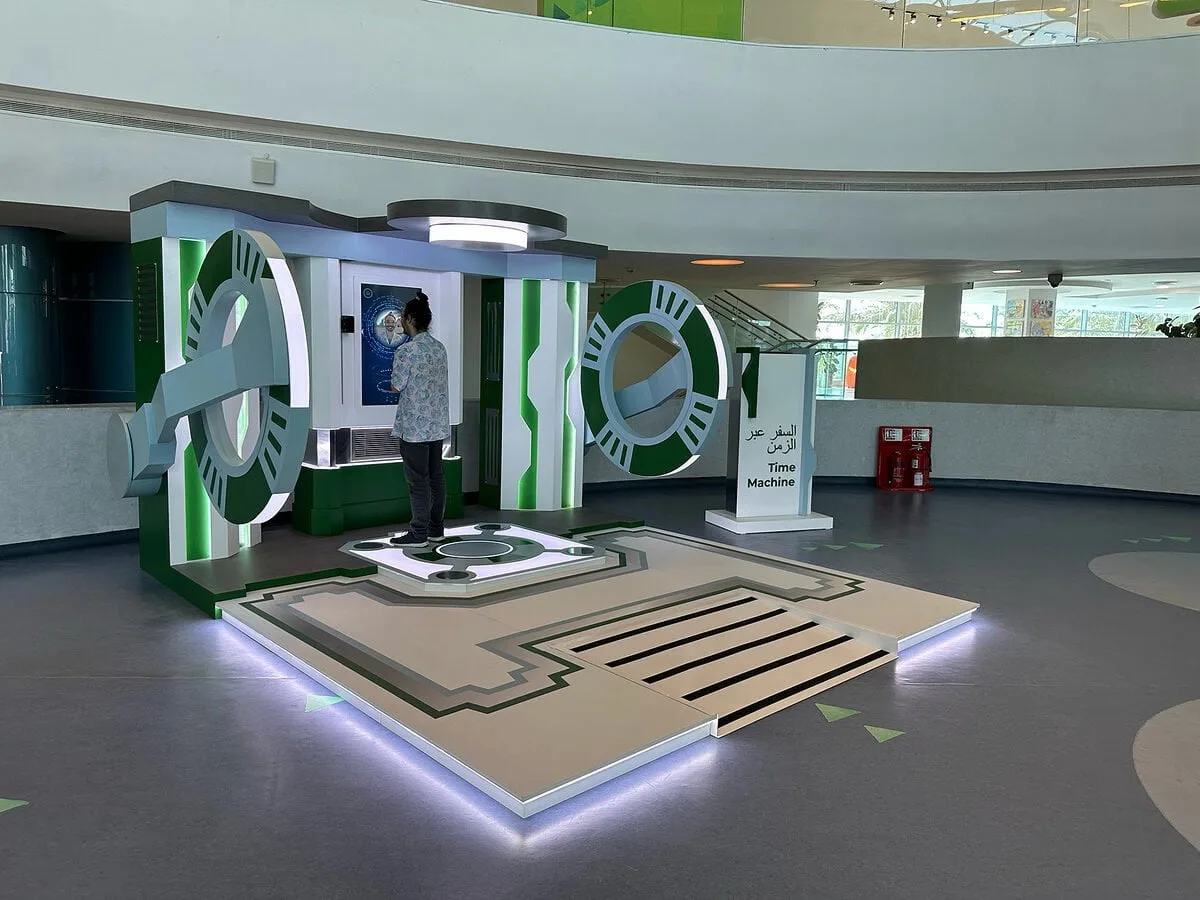
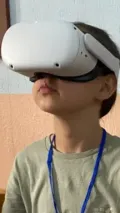
4. The Time Machine — Jump to 2030. The final station looks simple but holds the weight of the whole experience. Three questions are asked. A face-tracking camera that descends from above drops down until it locks onto the child's face — even if the child is short. It takes a photo. Based on the answers, the child sees themselves aged, in 2030 Qatar: if they answered well, set inside a perfect nature; if they didn't, in a different kind of future. The photo is sent to the child digitally — a 2030 memory to take home.
Carbon footprint stopped being a number on a slide. It became the child's own face, their own house, their own future.
3D Carbon Film in the Dome
A 3D film synchronized across a giant 360° dome, showing how much carbon each step of daily life produces. The film's script, visuals and audio are all Harikalar productions.
Three Screens + Hologram Score
Children answer daily life questions on three screens. Their answers feed live into the giant hologram at the next station, where the class's shared footprint becomes visible in real time.
3D Classic Qatari House
Answers light up across a 3D classic Qatari house: green correct, yellow needs work, red wrong. The child touches their mistakes, learns the right answer and lowers their own score with their own hand.
Time Machine — 2030 Portrait
A face-tracking camera descends from above to match the child's height and takes a photo. Based on the child's answers, they see themselves aged in 2030 Qatar — and walk away with the photo, sent digitally.
Execution
A permanent museum zone isn't a one-off production — it has to survive every move of every school group, every day, for years. Behind the Carbon Zone there were four separate disciplines: dome film production, interactive software, the face-tracking time machine, and the physical station builds. All of it was produced in Turkey by our own team, shipped to Doha, installed and handed over to the Kahramaa team.
Four Problems We Had to Solve
- The synchronized dome film: concept, script, animation and audio — a film that wraps an entire school group in 360°, all at once
- Score flow: answers from the three screens appearing live on the giant hologram at the next station
- The 3D Qatari house interaction: a layer that detects every touch on a yellow or red dot and shows the correct answer in sync
- The face-tracking camera: a system that descends automatically until it finds the child's face, takes a photo, and generates the right 2030 portrait based on their answers
Scope (A to Z)
- Concept and four-station experience design
- Full production of the dome film (script, animation, audio)
- Interactive Q&A software and hologram score system
- 3D Qatari house modeling + interaction layer
- Face-tracking camera hardware with automatic height adjustment
- 2030 time machine portrait generation system and digital delivery
- Production of all physical stations and stands in Turkey
- Logistics, shipping to Doha, install and museum team training
Team
- Project Lead & Concept: Atilla Baybara
- Technology Development: Utku Olcar
- Operations: Yiğit Sarı
- Client Relations: Şaban Yılmaz
- + Film production, animation, industrial design, hardware, software and Doha install team
Results
- A permanent zone at the Kahramaa Awareness Park museum in Doha since 2022 — school groups walk through the four stations in sequence every day
- A working prototype for teaching children carbon footprint concretely — a structure that shows them their own face, their own house, and their own 2030 instead of giving information
- The second phase of a long-term partnership with Kahramaa — built in the same park, after the Water Awareness Zone
- Dome film, software, physical stations and hardware delivered from a single source — produced in Turkey, installed in Doha
- The child leaves the museum not with a fact, but with their own portrait of 2030 — by the power of memory, not lecture
- Client
- Kahramaa
- Location
- Kahramaa Awareness Park, Doha, Katar
- Format
- Kalıcı müze deneyim alanı
- Opened
- 2022
- Audience
- Okul grupları, aileler, turistler
- Production
- Harikalar (Doha ofisi)
- Project Lead
- Atilla Baybara
- Technology
- Utku Olcar
- Client Relations
- Şaban Yılmaz
- Operations
- Yiğit Sarı
Just a Brief.
Tell us about your project — we'll prepare a custom proposal.
Message Received!
Our team will get back to you shortly.
Project Gallery