What is an Interactive Installation? A Practical Guide for Brands
By: Harikalar
What is an Interactive Installation and How Does It Work?
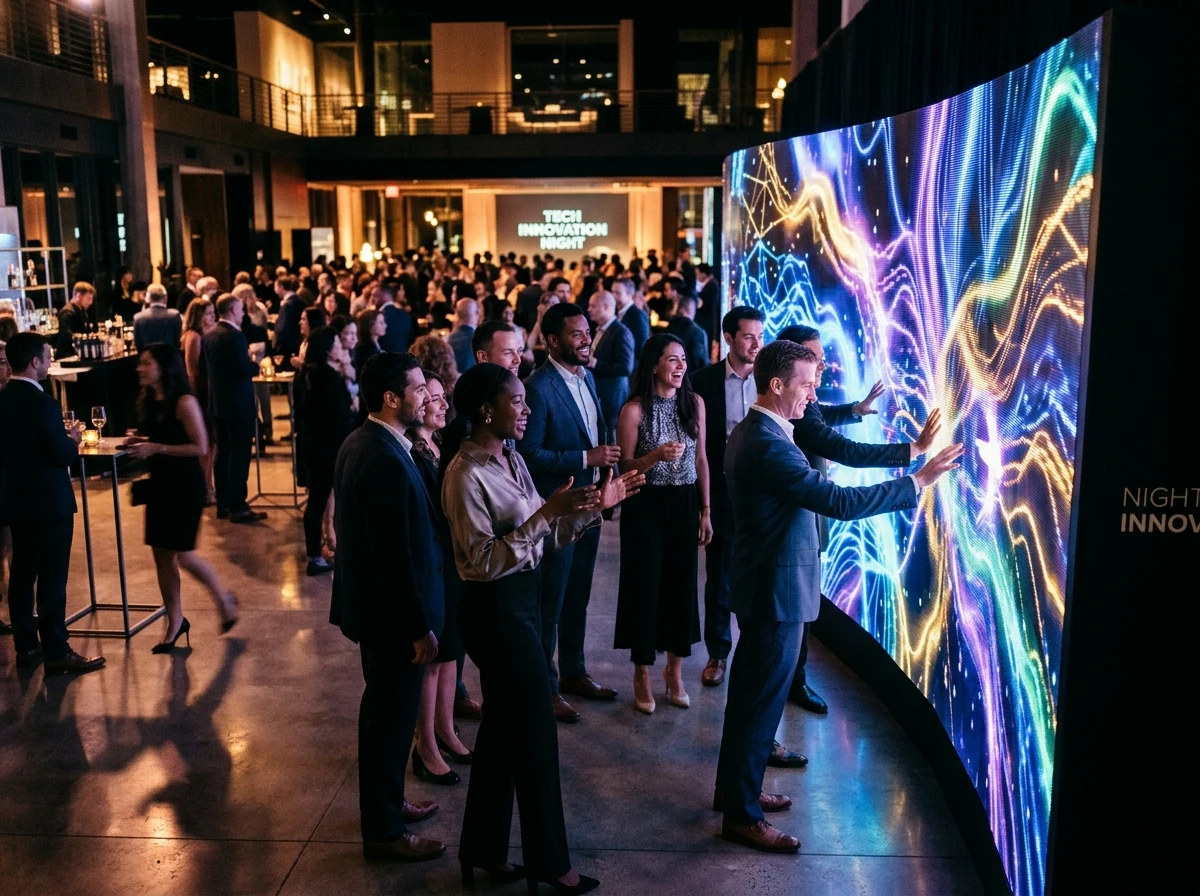
An interactive installation is a physical or digital setup that responds in real-time to visitors' touch, movement, sound, or other inputs via sensors, software, and various hardware components. It transforms a passive observer into an active participant by placing them at the center of the experience. This technology is one of the most effective ways to convey brand messages, showcase products, and forge an unforgettable connection with the target audience.
Essentially, an interactive installation creates a dialogue between humans and technology. Lights moving when you touch a wall, digital fish scattering when you step on a floor, or rotating a 3D product in mid-air with your hand gestures are concrete examples of this dialogue. Brands utilize this technology at trade shows, stores, launches, and corporate events to capture attention and leave a lasting impression.
Components of an Interactive Installation: Behind the Technology
Behind an impressive interactive experience are several core technological components working in harmony. These components determine how the installation perceives visitor inputs and responds to them.
- Sensors: These are the installation's "sensory organs." They detect the visitor's presence and actions. Motion sensors (like Kinect), touch sensors, pressure sensors, microphones (for sound detection), and cameras are among the most frequently used.
- Processor and Software: This is the "brain" of the experience. It processes data from the sensors and decides what kind of reaction to generate based on that data. For example, when someone walks on an Interactive Floor, the software detects this movement and commands the projector to display the corresponding visual effect (water ripples, scattering leaves, etc.).
- Output Units: These are the installation's "response" to the visitor. They are the hardware components that make the experience visible, audible, or tangible. Projectors, LED screens, speakers, motors, or devices providing haptic feedback fall into this category.
- Physical Structure: This is the framework that brings all the technology together and reflects the brand's identity. It could be a specially designed wall, a table, a booth, or an installation that fills an entire room.
Why Should Brands Use Interactive Installations?
In an era where traditional marketing methods are losing their impact, brands are seeking ways to build deeper, more meaningful relationships with their target audience. Interactive installations step in at this very point, offering countless advantages.
- Creates an Unforgettable Experience: People easily forget what they passively observe, but they remember experiences they actively participate in. An interactive installation associates your brand with a positive and lasting memory.
- Fosters Emotional Connection: When participants interact with your brand through gamification or exploration, they not only gain information but also have fun and are surprised. These positive emotions create a strong bond that nurtures brand loyalty.
- Simplifies Complex Messages: Explaining a product's technical specifications or a company's complex vision can be challenging. Exploring the layers of a product on an Interactive Table is far more effective than reading a brochure.
- Encourages Social Media Sharing: Visually striking and unique interactive experiences trigger people's desire to take photos and videos and share them on social media. This translates into invaluable organic promotion for your brand.
- Collects Valuable Data: How visitors interact with the installation (which features they touch most, how long they spend on a game, etc.) provides brands with concrete data about their target audience's preferences.
Which Interactive Installation for Which Event?
Choosing the right installation depends on your event's goals and target audience. Here are some practical suggestions for different scenarios:
Trade Show and Congress Booths
Purpose: To stand out from the crowd, attract visitors to your booth, and collect potential customer information.
- Suggestion 1: Reflex Wall. A competitive and fun game creates a crowd around your booth and associates your brand with a dynamic image.
- Suggestion 2: Hologram Booth. Showcasing your product or logo as a three-dimensional hologram floating in the air instantly encourages visitors to stop and watch.
In-Store Events and Shopping Malls
Purpose: To drive traffic to the store, increase visitor dwell time, and enrich the shopping experience.
- Suggestion 1: Interactive Floor. An interactive floor projection installed at the store entrance or in a common area of the mall, which changes with the movements of passersby, creates a strong attraction, especially for families with children.
- Suggestion 2: AR Experience. Augmented reality (AR) filters or games allow customers to interact digitally with products and provide them with fun content they can share on social media.
Product Launches and Corporate Events
Purpose: To impress guests, powerfully convey the brand story, and make the event unforgettable.
- Suggestion 1: Projection Mapping. Visual shows created by using the architectural elements of the event venue or a specially designed object as a canvas provide a "wow" effect for guests.
- Suggestion 2: Interactive Table. An interactive presentation detailing the company's milestones, new product features, or future vision allows guests to explore information at their own pace.
Frequently asked questions
How much space is needed for an interactive installation?
Space requirements vary greatly depending on the installation. An interactive floor may require a large area, while a hologram booth or interactive kiosk can be more compact. By sharing your event venue's layout and your goals with us, we can help you find the most suitable solution for your space.
Can I brand the installations with my own company's identity?
Yes, absolutely. All our interactive installations can be fully customized to your brand's corporate identity, from their digital interfaces (logos, colors within the software) to their physical structures (exterior cladding). Our goal is for the experience to look entirely yours.
Do you provide technical support during the event?
Yes, we typically have a brand ambassador or technical expert on-site during the event to ensure the installation runs smoothly and to assist visitors with its use. This allows you to focus entirely on your guests.
How are the rental costs for interactive installations determined?
The cost is determined by the type of installation chosen, the rental duration, the city or venue of the event, and the scope of requested software/hardware customizations. Since every event is unique, we prepare a customized quote for you instead of a standard price list.
I have a unique interactive installation idea in mind; can you bring it to life?
Of course. In addition to our ready-made solutions, one of our favorite tasks is to design and produce custom interactive installations from scratch, tailored to brands' goals and visions. Simply share your idea and objectives with us, and our experienced team will handle the rest.
Let's choose the right experience for your event together: get a free quote.
Get a Quote for Your Project
Contact us for experiences that will make your events unforgettable.