
The 5 Dimensions of Emotional Design: How Your Brand Can Engage All Five Senses
By: Harikalar
From Rational Messages to Sensory Connections: The New Frontier in Experience Marketing
In today's market, dominated by digital screens and data streams, the battle for brand attention is fiercer than ever. Consumers are increasingly resistant to advertisements and content that offer purely rational benefits. At this saturation point, the differentiating strategy lies not in logic, but in directly appealing to emotions and memory: emotional design. Transforming the brand experience into a holistic journey that engages all five senses is no longer a luxury; it's a strategic imperative for forging lasting and meaningful connections.
Spotify Wrapped's transformation of personalized data into a visual and auditory feast, or Nike's conversion of its stores into interactive playgrounds, are tangible examples of this shift. Successful brands stand out not by detailing product features, but by focusing on how they make their customers feel. So, how can we translate this abstract concept into a concrete strategy? Here's a strategic look at the five fundamental dimensions of emotional design and how they can be applied to the brand experience.
1. The Visual World: Creating Atmosphere Beyond Aesthetics
Sight is our most dominant sense, but in emotional design, visuals extend beyond just a beautiful logo or stylish decor. It's the art of creating an atmosphere that reflects the soul of the space, the brand's identity, and the story it wants to tell. Color psychology, lighting design, spatial flow, and material choices can shape a visitor's mood in seconds. Pop-up spaces established by brands at festivals like SXSW don't just showcase products; they offer immersive visual universes that invite visitors into the brand's world.
2. The Auditory Signature: Strategically Using Silence and Sound
Sound is often the most overlooked sensory element. Yet, when used correctly, it's incredibly powerful in setting the emotional tone of an experience. This isn't just about a background music playlist. Specifically designed sonic branding for the brand's identity, evolving soundscapes in different areas of a space, and even strategically employed moments of silence can deepen the experience. Mastercard's globally recognized sonic logo creates a consistent sense of trust at every brand touchpoint.
3. The Tactile Connection: A Return to the Physical in the Digital Age
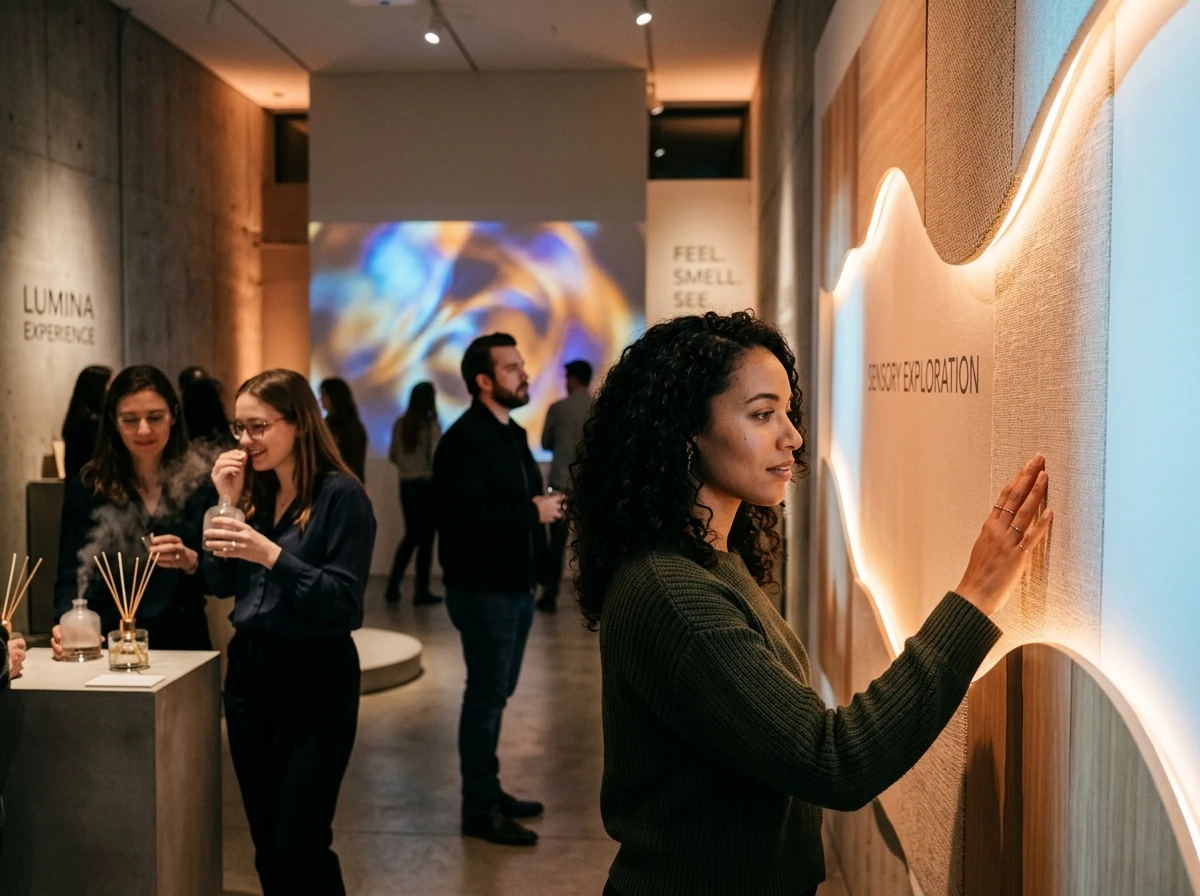
In a world accustomed to touching screens, physical contact with real and distinct textures leaves a surprisingly powerful impression. From the quality of the paper on an event invitation to the material of the display surfaces in a pop-up store, every detail directly influences the perception of a brand's quality and character. The leather and wood textures inside luxury cars at auto shows, or the smooth metal surfaces used at a technology brand's booth, tell a story that words cannot convey.
4. Scent Memory: Activating Our Most Primal Sense
Scent is our sense most directly linked to memory and emotion. The olfactory bulb, the brain's scent center, is directly connected to the amygdala and hippocampus, responsible for memory and emotion, making scent a powerful marketing tool. Many luxury hotels and retail brands use unique signature scents to leave a lasting impression on everyone who enters their spaces. Singapore Airlines' special "Stefan Floridian Waters" scent, used in its cabins and on hot towels, is a symbol of comfort and luxury synonymous with the brand.
5. The Power of Taste: Creating Shared Moments
Taste is one of the most social and intimate sensory experiences. A carefully selected coffee offered within a brand experience, a cocktail reflecting the brand's identity, or a treat linked to a story, builds a connection among participants and creates a positive memory. Coca-Cola's global activations, where they let people taste different flavors from various countries, combine the brand's universal identity with a local and personal experience. Tasting experiences are one of the most effective ways to demonstrate a brand's generosity, attention to detail, and hospitality.
The Symphony of Senses: Holistic Experience Design
The true power of emotional design lies not in managing these five senses individually, but in orchestrating them in harmony, like a symphony. A holistic experience where lighting changes with the rhythm of the music, the scent of the offered treat complements the ambient fragrance, and tactile surfaces complete the visual aesthetic, bypasses rational thought and speaks directly to the heart and memory. The possibilities offered by technology and artificial intelligence hold the potential to personalize these sensory journeys for each participant, shaping the future of experience marketing.
In conclusion, as digital noise intensifies, brands need to return to the most fundamental elements of being human: our senses. Brands that create an atmosphere instead of listing product features, and gift a memory instead of shouting a slogan, will win the loyal customers of tomorrow, today.
If you'd like to implement these trends for your brand and design an unforgettable experience, get in touch with us.
Get a Quote for Your Project
Contact us for experiences that will make your events unforgettable.